Chao had one question before he said yes to his first AppSumo campaign: "What's the typical lifetime for a Sumo-ling?"
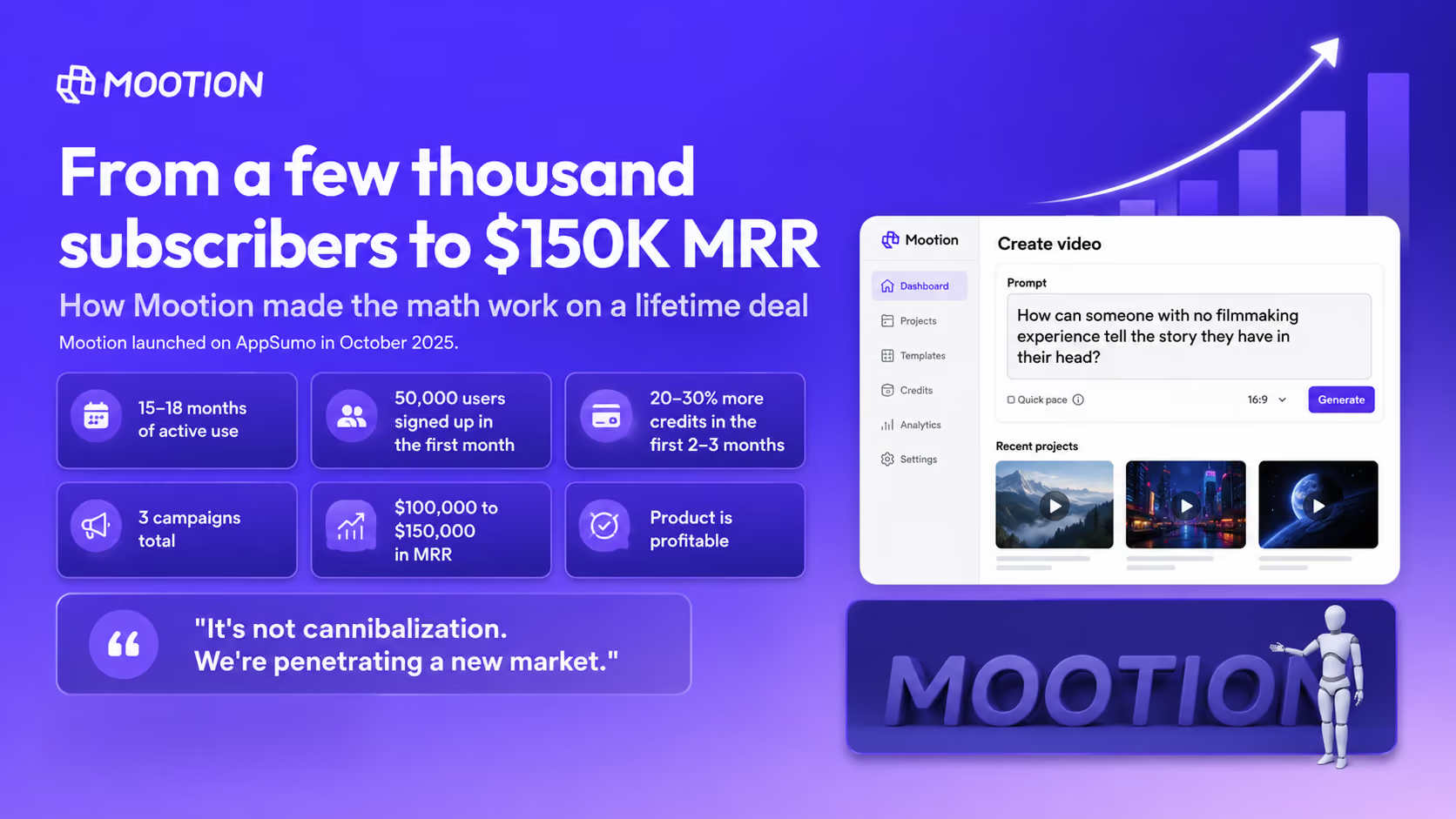
The answer was the number that convinced him: 15 to 18 months.
The subscription gap
When Chao and his team of AI scientists and engineers built Mootion in late 2023, they wanted to answer a question no tool had answered yet: how can someone with no filmmaking experience tell the story they have in their head?
By mid-2024, they had something. Mootion was one of the first tools to let users create full-length AI videos from text, images, or audio. We’re talking start-to-finish stories, not just 10-second clips. Fifty thousand users signed up in the first month. Teachers in Oman were using it to flip their classrooms. A retiree in South Africa was using it to make videos of his and his wife's life stories so she could watch from her hospital bed during leukemia treatment.
Clearly, the product was working. But the business model had a hole in it.
"I started seeing something with users from Brazil, from the Middle East," Chao says. "For American or Japanese users, two or three dollars a month for a subscription is nothing. But other markets are more price-sensitive or they just don't buy subscriptions. They want to own something."
Chao had known about AppSumo since his first business a decade prior. When the AppSumo team reached out, he was already wondering whether a lifetime deal could work for an AI product. After all, every video generated carried a real, ongoing infrastructure cost.
The credit question (and how to answer it)
Chao had a legitimate math concern. If users pay once and the product costs money every time they open it, when does that ever balance out?
Instead of dismissing it, he built a model.
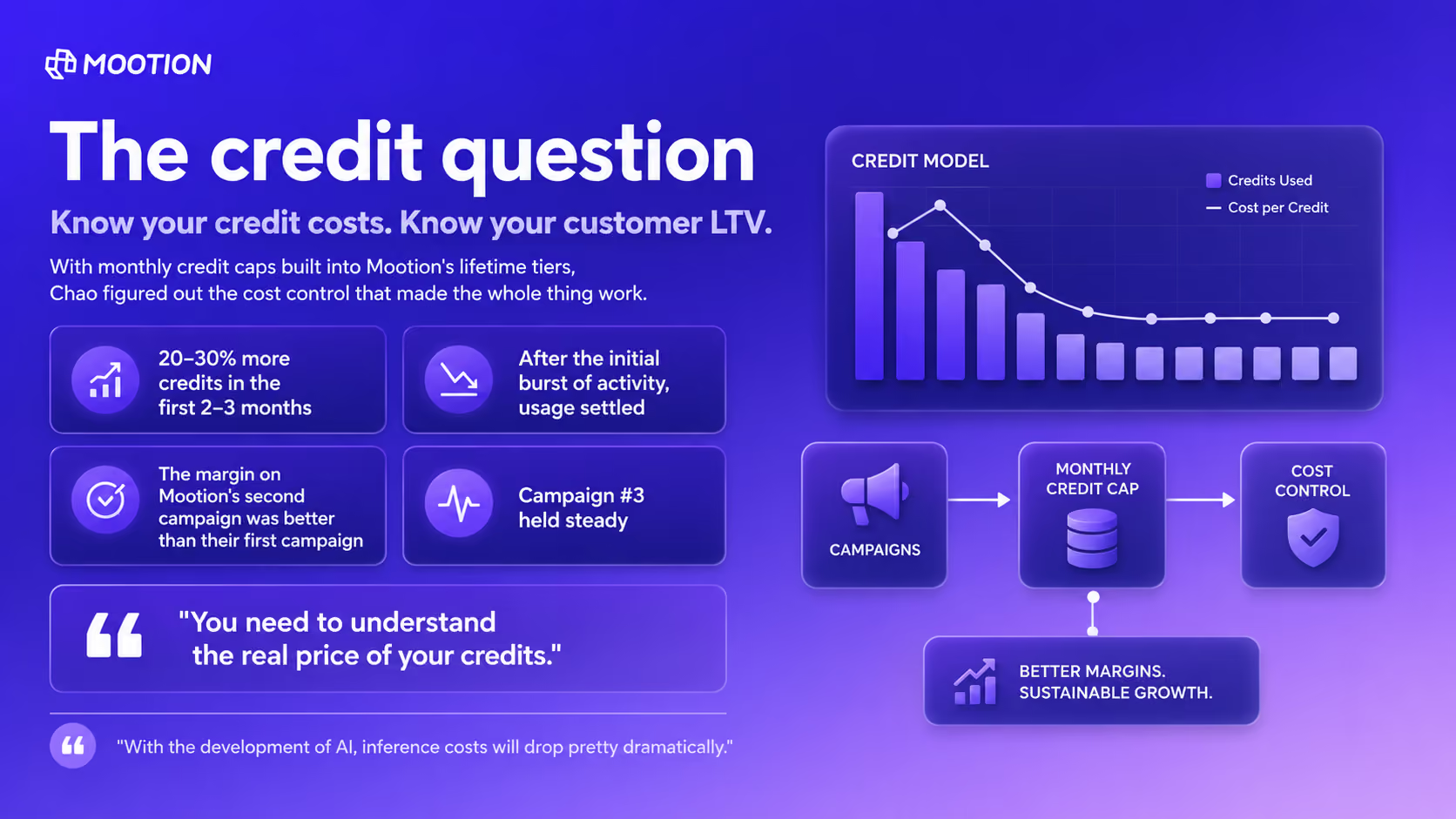
"You need to understand the real price of your credits. Don't just take it for granted. And you have to know your customer lifetime value (LTV). Those two numbers together are what tell you whether the model works."
The LTV of AppSumo users on Mootion (about 15 to 18 months of active use) matched what the AppSumo team had seen across the platform. The usage pattern was what changed Chao’s thinking.
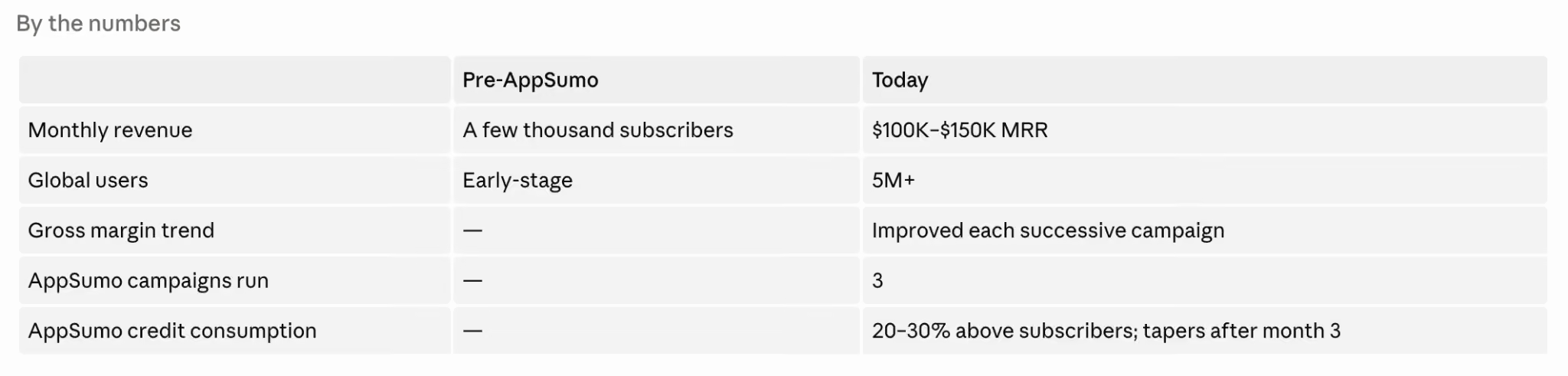
AppSumo users came in hot. In the first two to three months, they consumed 20 to 30 percent more credits than regular subscribers.
During Mootion’s first campaign, Chao was on the phone with his AppSumo rep every day. "What are these guys doing? They're submitting 100 tasks in two minutes."
To get to the bottom of this, he reached out directly to the most active users. Their answer was almost always the same: "I love this product. I want to see everything it can do."
Finally, usage settled. After the initial burst of activity, AppSumo buyers looked nearly identical to regular subscribers in terms of credit consumption. Chao had his data.
Meanwhile, inference costs for AI kept decreasing. The margin on Mootion’s second campaign was better than their first campaign. Campaign #3 held steady. With each round, the model got a little easier to defend.
"With the development of AI, inference costs will drop pretty dramatically," Chao says. "That helps the lifetime deal model work for AI products."
With monthly credit caps built into Mootion's lifetime tiers, Chao figured out the cost control that made the whole thing work.
Cannibalization vs. market expansion
Chao initially had another concern: that a lifetime deal would gut subscription revenue. Those worries were quickly disproven by data.
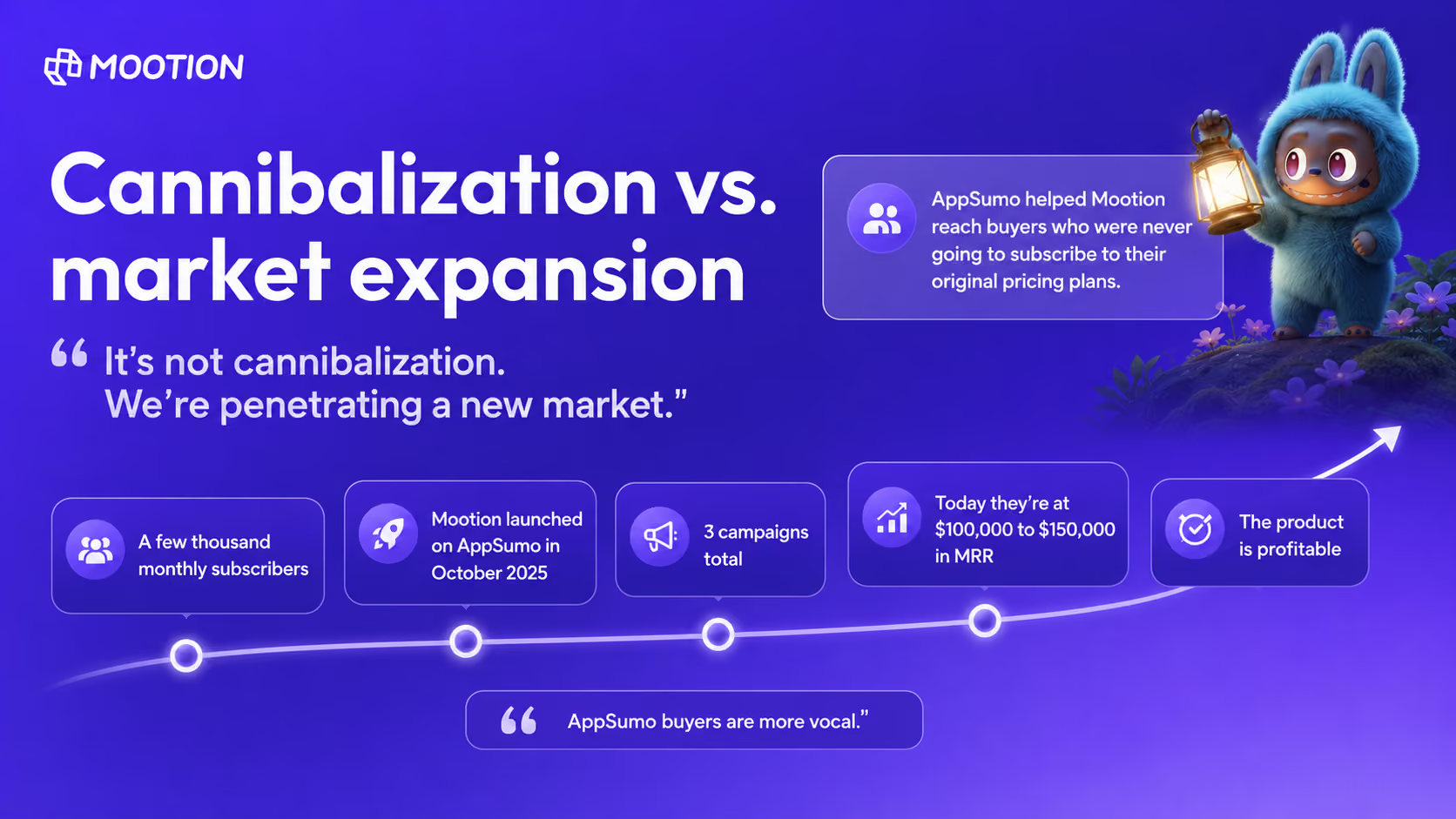
Mootion had a few thousand monthly subscribers when their first campaign launched in October 2025. Today they're at $100,000 to $150,000 in MRR, and the product is profitable.
Here’s why, according to Chao: "It's not cannibalization. We're penetrating a new market."
AppSumo helped Mootion reach buyers who were never going to subscribe to their original pricing plans.
Wherever markets are price-sensitive, a lifetime deal is the only real entry point. In regions where people don't operate on subscription budgets, it's ownership or nothing. Rather than displace future subscribers, those buyers became the ones telling others about Mootion, some of whom became paying monthly customers.
AppSumo buyers are "more vocal," in Chao's words. Everything from their reviews and feedback to their word-of-mouth supported subscription growth rather than competing with it.
Mootion ran three campaigns total. The first tested the model. The second was a data exercise: Chao watched his AppSumo cohort and his subscriber cohort in parallel, looking for meaningful divergence. There wasn't much. By the third, he was running on AppSumo purely to grow. Each campaign built on the last.
A lifetime deal for an AI product is a modIliang exercise, not a cost problem. Know your credit costs, know your customer LTV, build in the caps, and let inference costs keep coming down.
Take it from Chao, who’s already getting calls from other AI founders asking for his playbook.
Mootion launched on AppSumo in October 2025.
Max Lin
Director of Brand at AppSumo based in New York. He's a former financial crimes investigator turned marketer.
Pretty Prompt’s AppSumo campaign started as a way to stress-test scale, but became an unexpected growth engine for subscriptions. With 5,200+ purchases, 170 reviews, and a 4.86-star average, Charlie Day and his team turned lifetime deal buyers into proof, feedback, and “collateral marketing” that boosted MRR long after the campaign ended. Dive in to see how they pulled it off.