What are past projects, failures, or successes you’ve had in your career?
Early in my career at a 15-person company, everyone weighed in on every system’s decision, but no one shared the same picture of how work actually ran.
I was 23 years old, stitching together conflicting perspectives across spreadsheets and Slack threads until it culminated in an anxiety attack in 2017—a hard failure that taught me how costly it is when operations live only in people’s heads.
Later, at Uber Works (within Uber’s Big Bets division), I joined as the second operations hire, and we scaled from roughly $10k/month to $10M ARR in 18 months. You’d expect a logistics giant to have pristine processes, but even there I saw fragmented documentation, tool sprawl, and misalignment between teams. That contrast—chaos at a small startup and friction inside a global company—made the problem unmistakable and universal.
Those experiences shaped the way I think about operations and organizational stucture in a modern company. I started Puzzle in 2020 and since led 95+ process discovery projects, helped teams visualize 100,000+ workflows, and built Puzzle to turn operations into clear, connected maps that tie steps to roles, tools, and costs.
The lesson across projects, failures, and successes is the same: when you make operations visible and shared, teams move faster, waste less, and actually improve. Puzzle exists because clarity shouldn’t depend on headcount, heroics, or memory.
What 3rd party tools is your product critically dependent on?
Reactflow
Where is your customer data stored?
United States
What is your current monthly recurring revenue (MRR)?
$4800
How many customers do you have today?
131
What’s the origin of the idea for your product?
Right out of college, I jumped into entrepreneurship, and early in my career, I was running the operations for a 15-person company. This company was all chaos, no order. Any time we wanted to make a change to a process or system, we’d call full team meetings. Everyone weighed in on every system’s decision, but no one shared the same picture of how work actually ran.
I was 23, stitching together conflicting perspectives across spreadsheets and Slack threads until it culminated in an anxiety attack in 2017—a hard failure that taught me how costly it is when operations live only in people’s heads. Unsurprisingly, that company failed.
But I left with a vision — to find a way to get everyone on the same page operationally. To enable teams to work together with the big (operational) picture in mind. So that anyone in the organization can pick up work when someone is on vacation or leaves the company. So that anyone can build on top of existing processes and systems. So that continuous improvement could be democratized across an organization (without sacrifcing contextual knowledge).
In June 2020, I was laid off from Uber, and I started Puzzle.
What problem is your product solving and how?
Most businesses run their operations across scattered spreadsheets, Slack threads, and disconnected tools, which makes it nearly impossible to see the full picture of how work actually gets done. This leads to misaligned teams, wasted tool spend, broken handoffs, and processes that don’t scale.
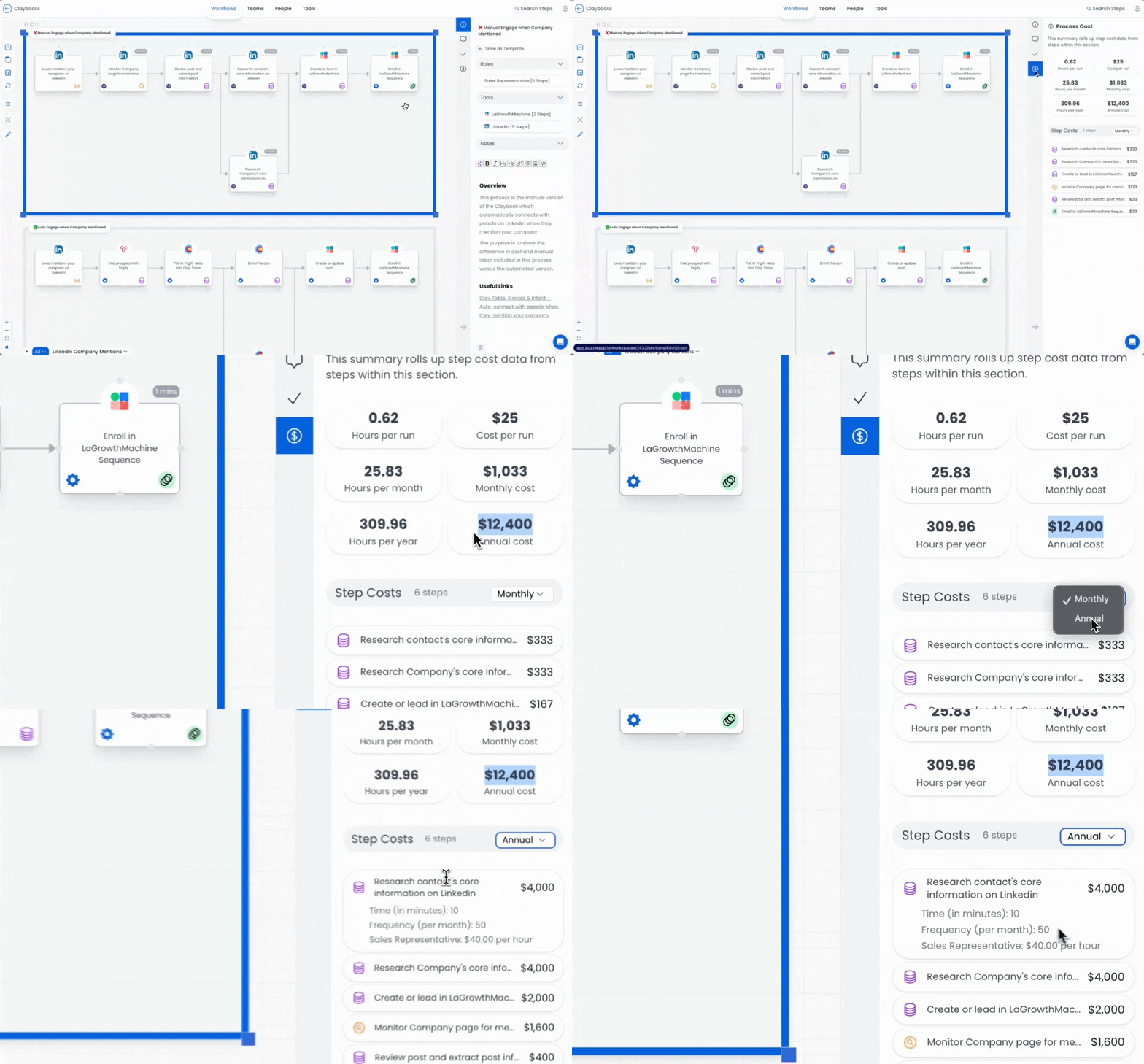
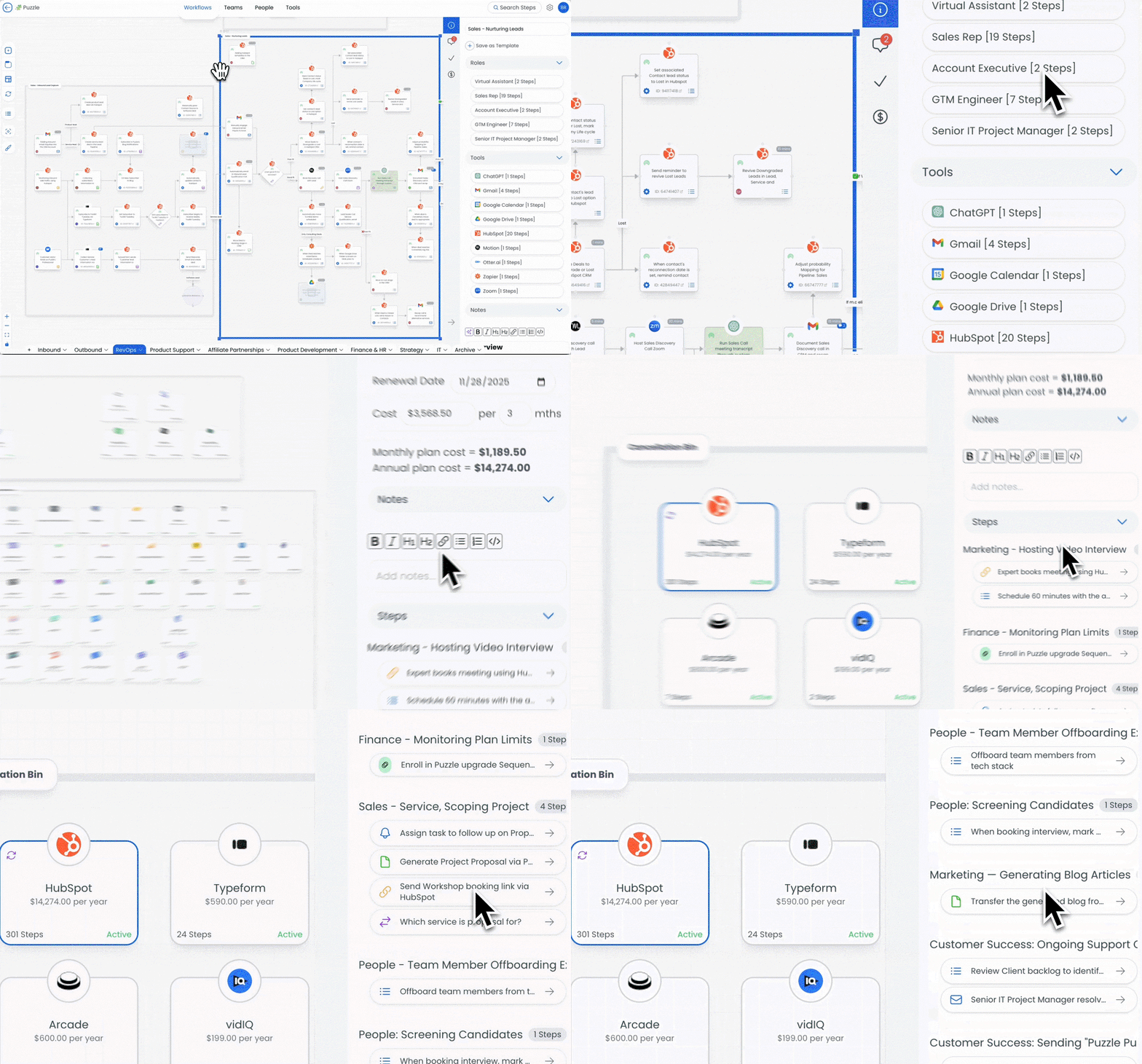
Puzzle solves this by turning messy operations into one clear, connected map. Every step in a process is tied to the roles, tools, and costs behind it, so you’re not just drawing diagrams—you’re building a living system of record. Teams can see their workflows visually in the Workflow Canvas, understand ownership in the Team Canvas, audit their tech stack with the Tool Canvas, and measure time and spend through Puzzle’s Costing Layer.
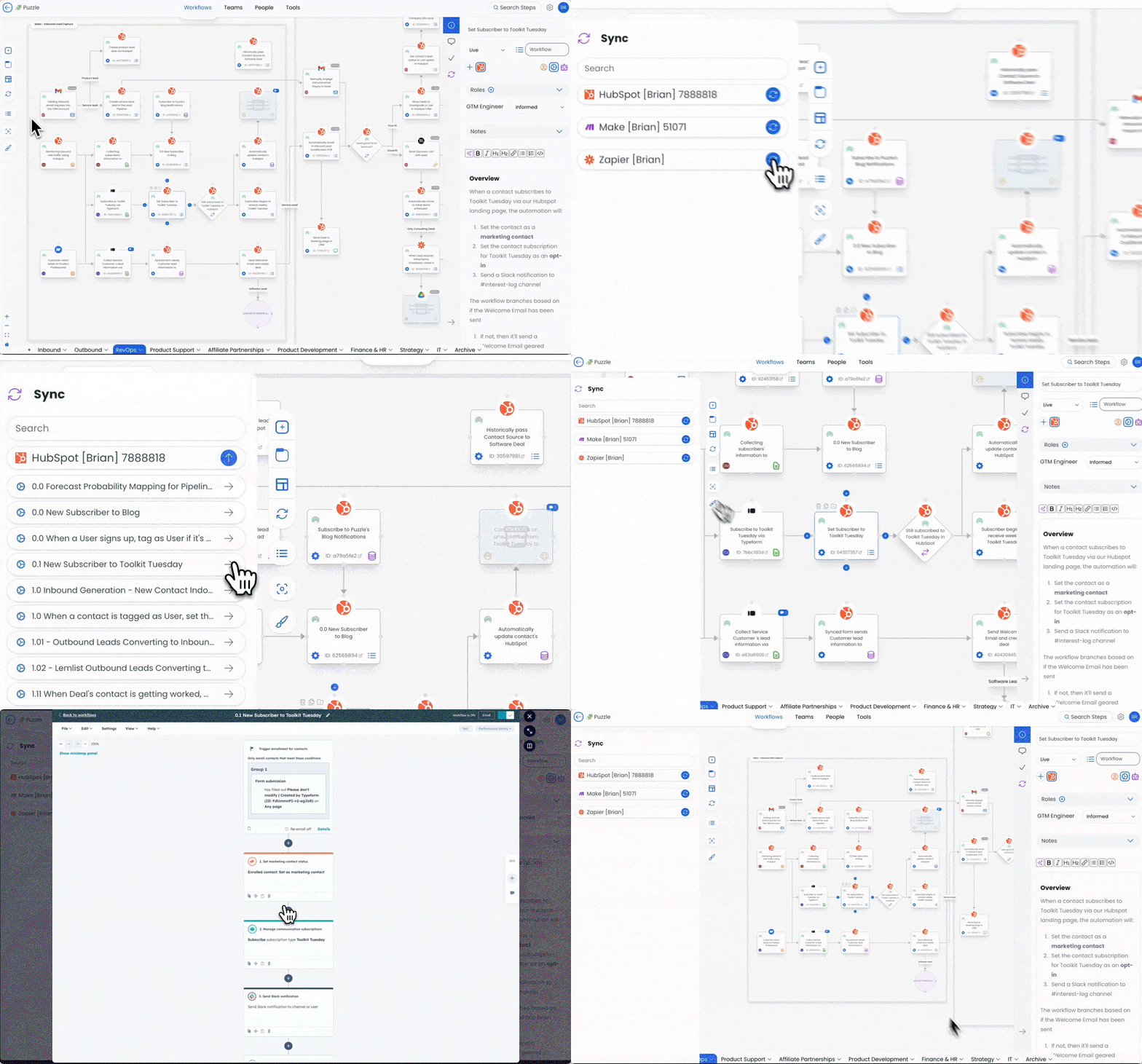
With integrations to HubSpot, Make, and Zapier (and AI assistance on the way), Puzzle keeps documentation synced with the systems businesses already use.
What sets Puzzle apart is its focus on depth over decoration. While other tools stop at static diagrams or everything-whiteboards, Puzzle was built solely for documenting and improving operations. That means every step comes with context—roles, tools, notes, even Loom or Scribe videos—so it functions as a visual playbook teams can actually use.
It also doubles as a relational database of people, processes, and tools, giving operators the power to pivot perspectives instantly: from a workflow view to a team view to a cost view. Instead of spaghetti charts that collect dust, Puzzle creates maps that are standardized, dynamic, and measurable, making it the only diagramming platform designed to help businesses continuously improve their operations.
What’s the #1 thing you’re looking to gain from the AppSumo campaign?
Virality, word of mouth, and exposure.
What are your plans with the customers, cash, and learnings from the AppSumo campaign?
Invest back into developing the platform with more integrations with best-in-class tools


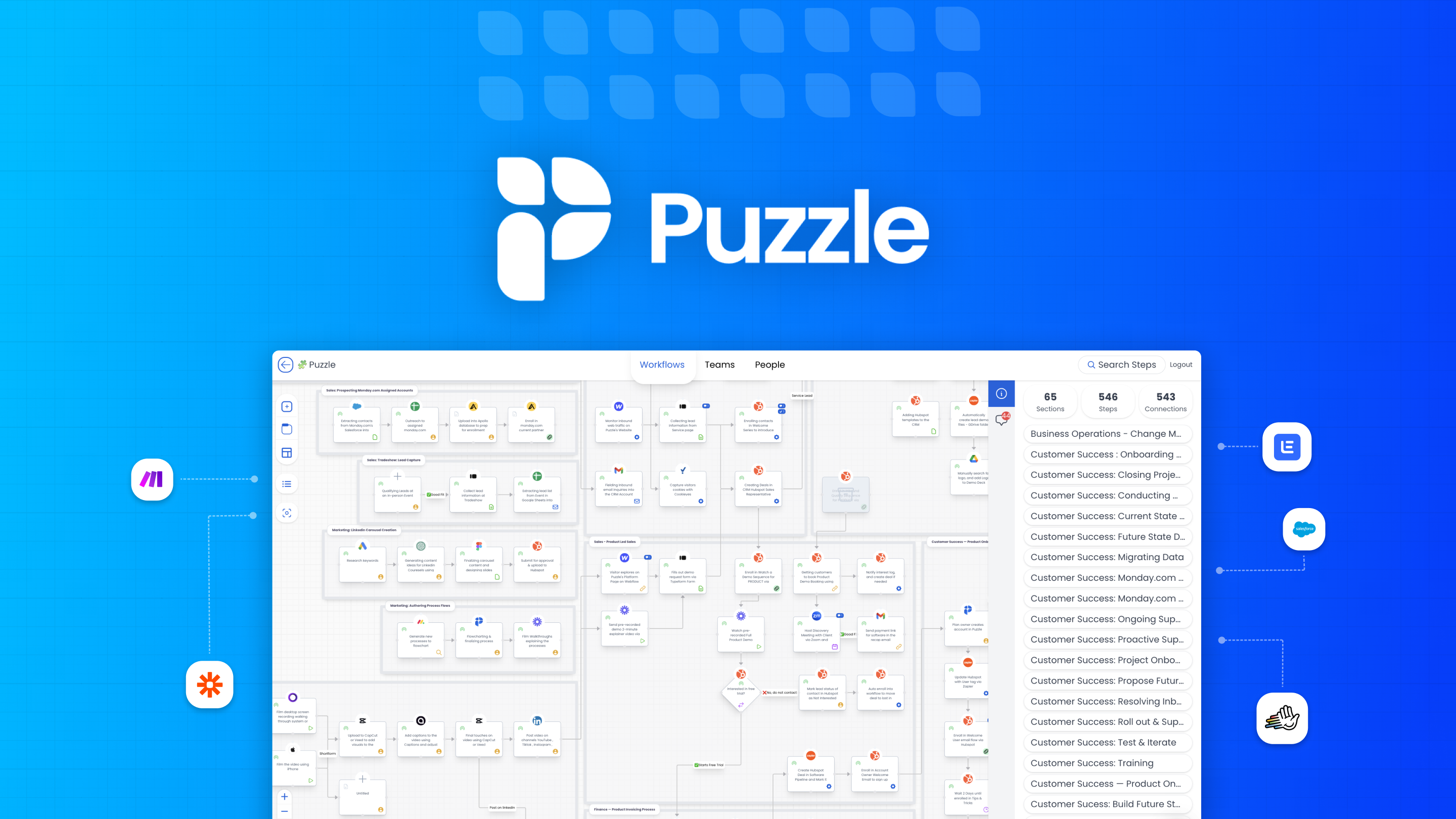
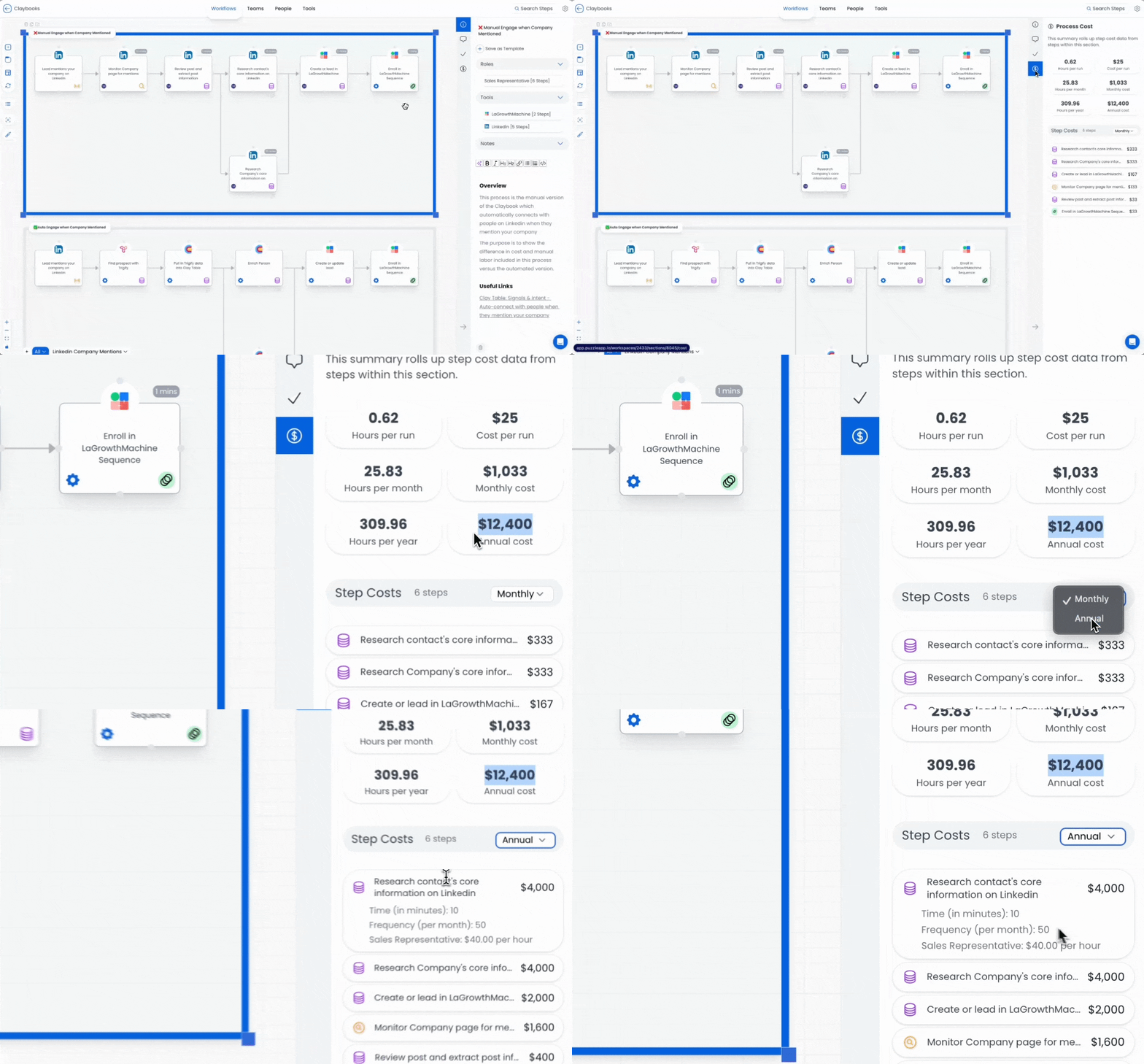
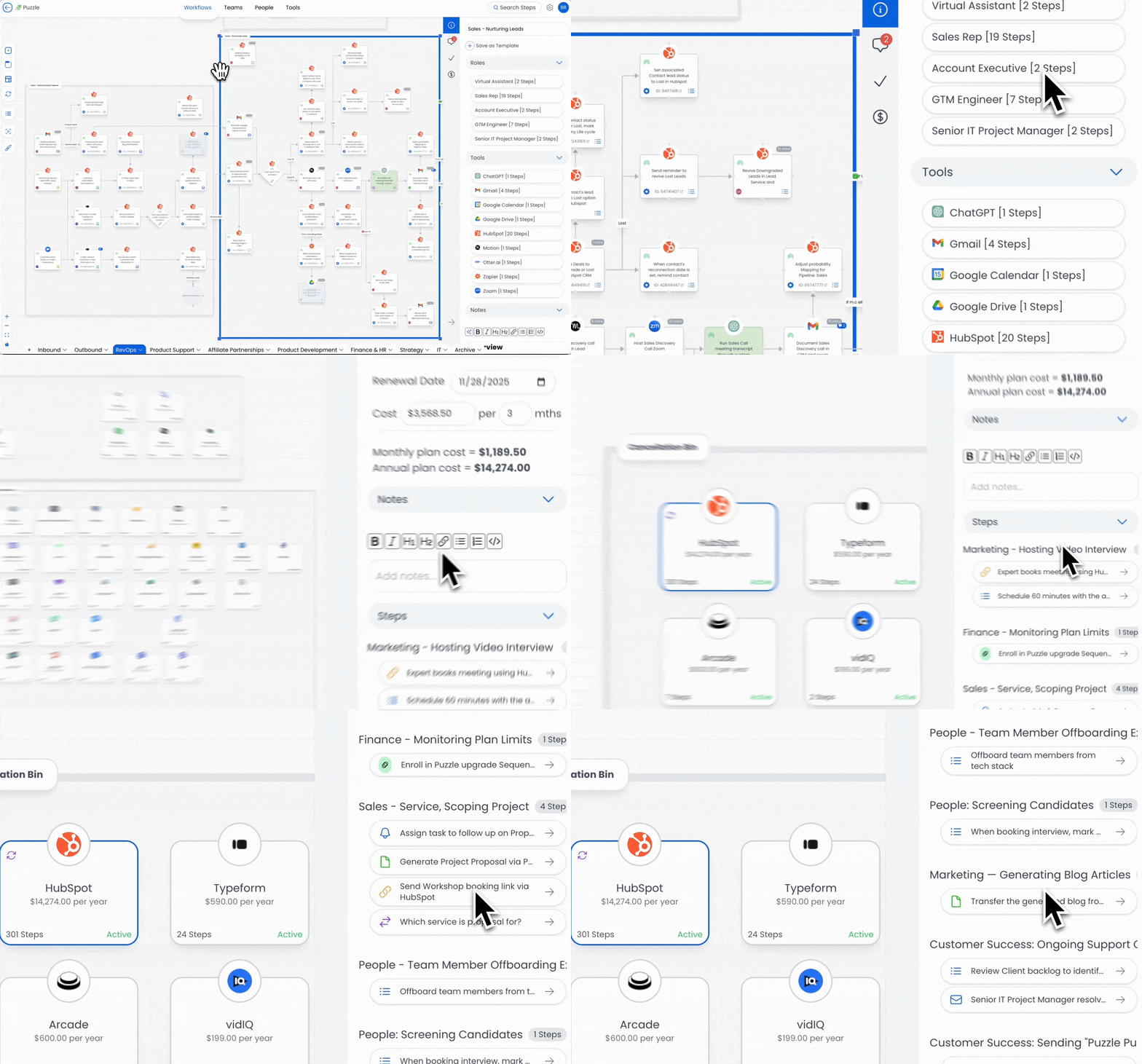
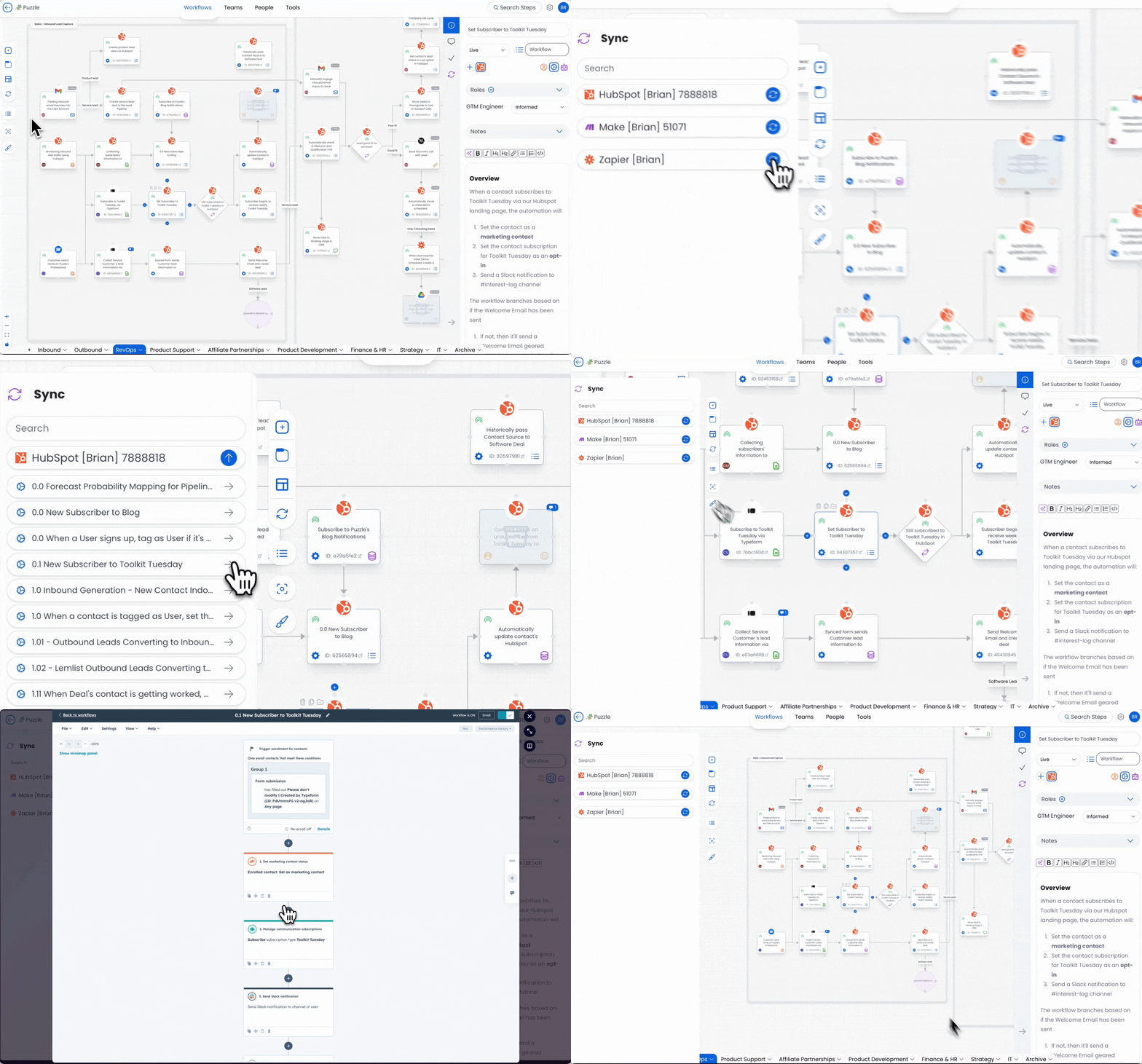
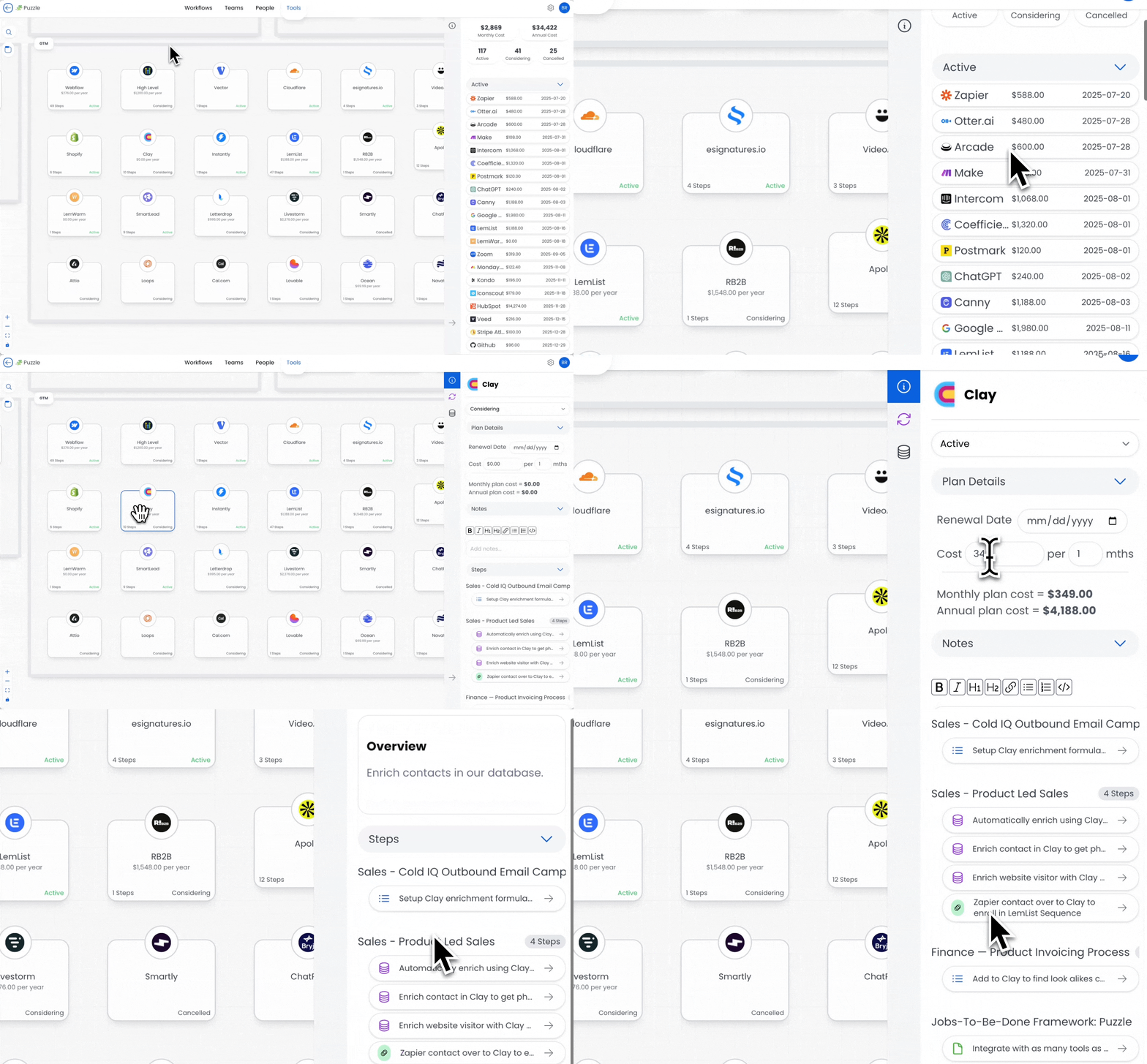

 Organize complex processes into visual diagrams and sync to HubSpot, Zapier, and Make