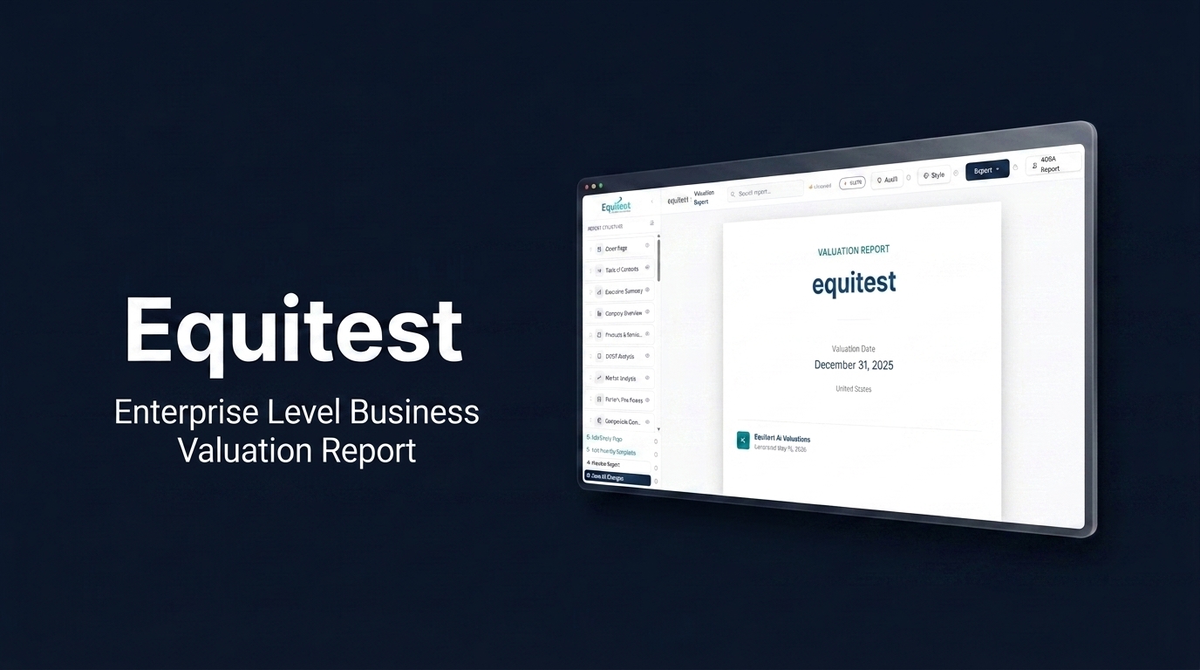
Why I Rebuilt Equitest From the Ground Up — Introducing Equitest Elite
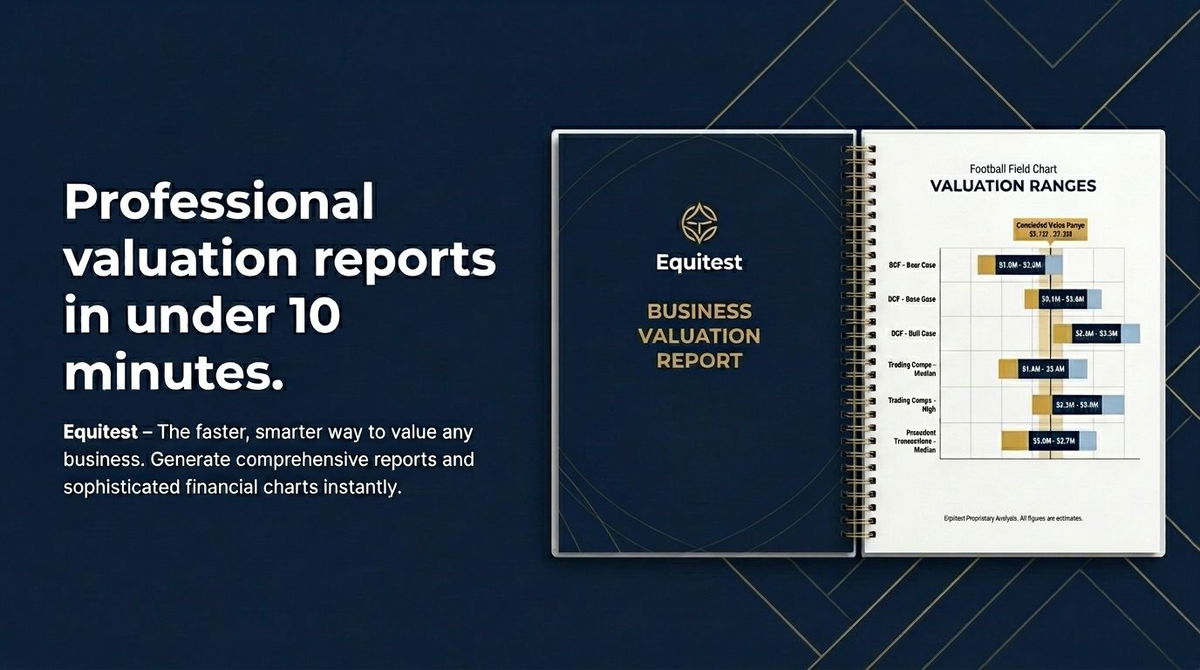
A few years ago, someone asked me how much their company was worth, and my honest answer was: "give me two weeks and $8,000, and I'll tell you." That gap — between how fast businesses actually move and how slow (and expensive) it is to get a real, defensible valuation — is the whole reason Equitest exists.
I built the first version of Equitest to close that gap for founders, accountants, and advisors who couldn't justify hiring a boutique valuation firm for every deal, every 409A filing, every "what's this actually worth" moment. It worked. Thousands of valuations later, real investment committees were trusting reports our AI generated in minutes.
But "it worked" isn't the same as "it's done." The more professionals used Equitest — CPAs, business brokers, M&A advisors — the more they pushed it. They wanted institutional-grade rigor, not just speed. They wanted a report they could hand to a bank, a court, or an investment committee without an asterisk. So over the past several months, I went back and rebuilt the engine from the ground up. That's Equitest Elite.
What's actually different:
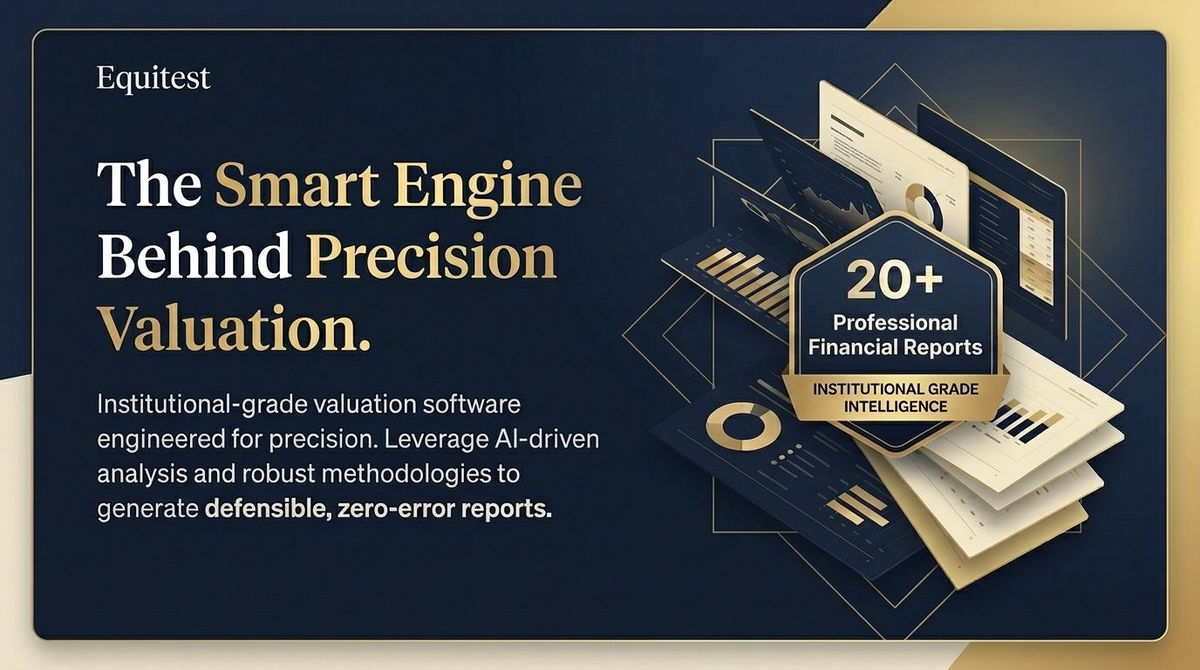
- A 40-chapter report architecture. Not a generic PDF — a disciplined, eight-module structure covering everything from SWOT and Porter's Five Forces to DuPont analysis, Altman Z-Score, and a full Monte Carlo simulation with 10,000+ probabilistic outcomes. Every valuation follows the same rigorous path, every time.
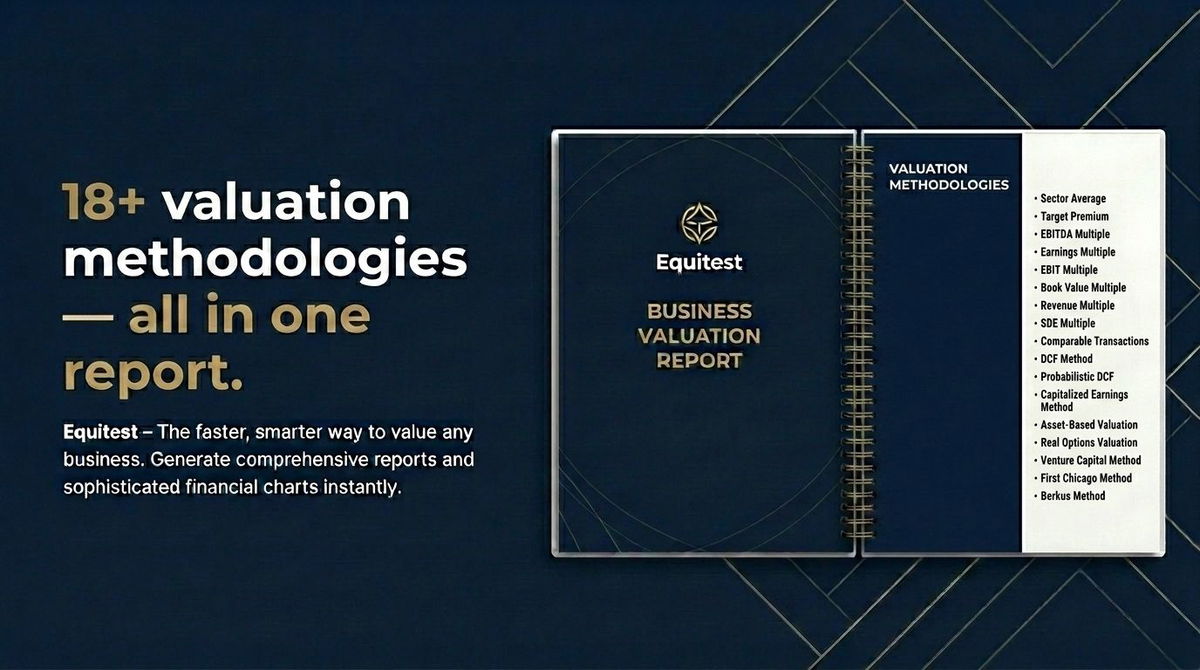
- 18+ valuation methods, applied automatically. DCF with Gold-Seek and Tornado Chart sensitivity, EBITDA/EBIT/Revenue/SDE multiples, Venture Capital and First Chicago methods for early-stage companies, Real Options, Asset-Based — the AI reads your company's life-cycle stage and industry, then weights the methodologies that actually apply. No more guessing which model fits a pre-revenue startup versus a mature business.
- An AI audit engine running in the background. Cross-document consistency checks, anomaly detection on growth rates and margins, and a regulatory compliance scan against IRS 409A, ASC 820, IVS, and USPAP standards — flagging problems before you export, not after a client does.
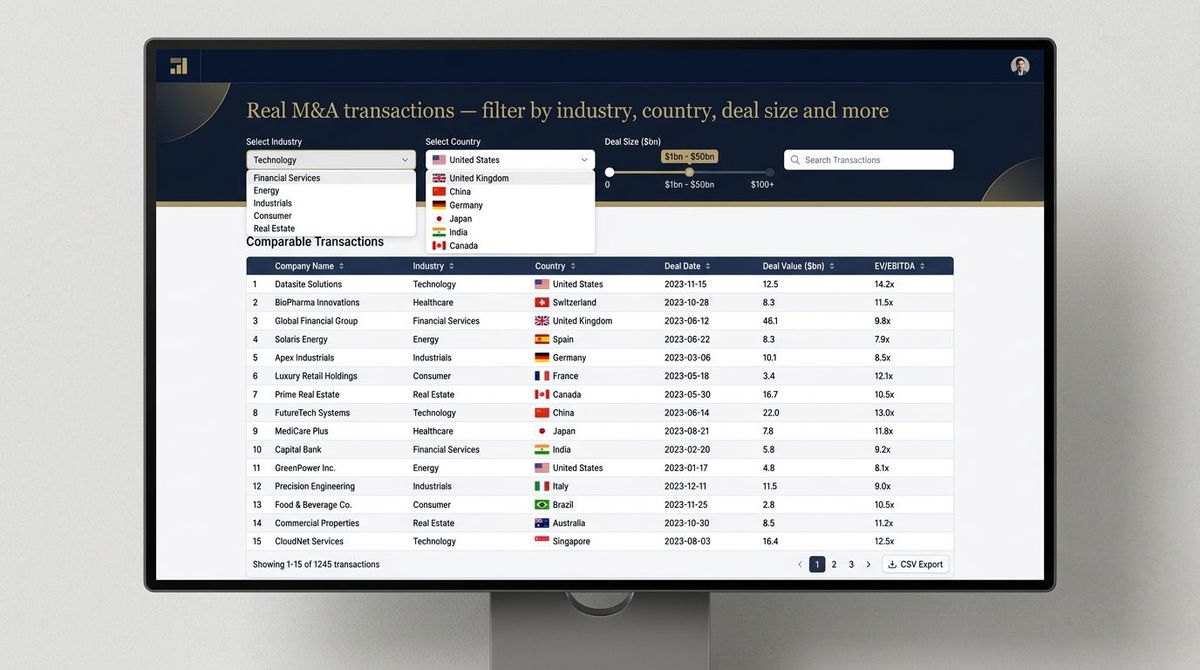
- Global by default. 152 countries, 22 languages, real-time syncing with a database of 50,000+ public companies and a live M&A transaction database, so comps and multiples aren't stale.
- A human safety net. AI gets you 90% of the way there. For the last 10% — the weird capital structure, the edge case — our team of CFAs and valuation specialists is a click away. This was never meant to replace judgment; it's meant to make good judgment faster.
Under the hood, none of this is smoke and mirrors — everything is built on IVS/USPAP-compliant methodology, encrypted with AES-256, and run on SOC 2 Type II / GDPR-compliant infrastructure. I wanted Elite to be the version I'd be comfortable handing to an investment committee myself, not just a faster version of the old tool.
A word on "just use ChatGPT / Claude for this."
I get asked this a lot, so let me be straight about it: a general-purpose AI chatbot is not a valuation tool, and I say that as someone who uses these models every day to help build Equitest. Ask Claude or ChatGPT to value your company and you'll get something that sounds confident and reads well — and that's exactly the problem. There's no persistent financial model behind it, no cross-checking your P&L against your balance sheet, no live comps database, no consistency between the DCF assumptions and the multiples it quotes a paragraph later. Ask it twice and you can get two different numbers with equal confidence in both. It has no audit trail, no regulatory framework (IRS 409A, ASC 820, IVS, USPAP) it's actually checking itself against, and nothing stopping it from quietly agreeing with a comparable company or a growth rate that sounds plausible but isn't real.
That's the gap Elite is built to close. The AI inside Equitest isn't chatting with you about your business — it's running the same 18+ methodologies, cross-referencing them against each other and against live market data, and flagging exactly where the numbers don't reconcile. It's a financial model with AI as the engine, not a chatbot with a valuation costume. If you wouldn't hand a bank or an investor a valuation you got from a general chatbot, that's exactly the instinct I built Elite to satisfy.
If you've been priced out of "real" valuation work — as a solo CPA, a business broker juggling ten clients, a startup founder prepping a raise, or an advisor who's tired of rebuilding the same Excel model for the hundredth time — this is who I built Elite for.
I'm genuinely excited to have the AppSumo community be some of the first people to put it through its paces. Kick the tires, run a valuation on your own company, break something if you can. I read every piece of feedback myself — this product has always been shaped by the people actually using it, and I want Elite to keep going that way.
— Tamir Levy, Ph.D. Founder & CEO, Equitest